
Two things that get confused
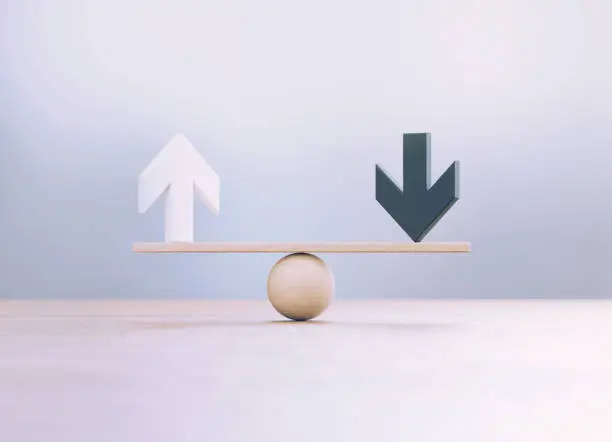
Producing information and making a decision are different activities, and AI is much better at the first.
A system can tell you that this customer’s orders have fallen 40% and their payment days have lengthened. That is information, and it is genuinely useful.
Whether to keep extending them credit is a decision. It involves what you know about their business, your relationship, your appetite for risk, and what you would lose by being wrong in either direction.
The system does not have most of that. It has your transaction history.
Getting this distinction right is what separates useful adoption from expensive disappointment.
What it does well
Four things, and all of them are about attention rather than judgement.
Noticing. A customer’s ordering pattern has changed. A supplier’s lead times have quietly lengthened. A product’s margin has declined over six months.
These are visible in your data and nobody has time to look at everything. The value is not the insight — it is that someone looked at all of it.
Ordering. Which invoices to chase, which deals to call, which stock to review. Prioritisation is a real problem and this is a real answer.
Summarising. Condensing what happened so a person can think about it rather than assemble it.
Answering factual questions quickly. What did we sell, to whom, when. Faster than commissioning a report.
FIGURE 1: WHAT A SYSTEM CONTRIBUTES TO A DECISION
Noticing
- Something changed. Nobody has time to look at everything
the system does.
- 0
Ordering
- Which of forty things deserves attention first.
Summarising
- Assembling what happened, so a person can think rather than gather.
Answering
- Factual questions, quickly, without commissioning a report.
What it does not do
Four things, and they matter more than the list above.
It does not know what is not in the data
Your customer’s largest client just went into administration. Their new operations director dislikes your product. Your competitor is about to reduce prices.
None of this is in your transaction history, and all of it changes the right decision.
It does not know your risk appetite
A model can tell you a customer has a 30% chance of paying late. Whether that is acceptable depends on your cash position, the margin on the order, and what losing them would cost.
Those are your circumstances, not facts about the customer.
It does not weigh consequences asymmetrically
Being wrong in one direction often costs far more than the other. Refusing credit to a good customer loses a relationship. Extending it to a bad one loses money.
A probability does not tell you which mistake you would rather make.
It does not carry accountability
Someone signs the accounts. Someone answers to the board. Someone explains to the customer.
“The system suggested it” is not an answer, and knowing that changes how a decision should be made.
FIGURE 2: WHAT EACH SIDE BRINGS
The system knows
- What happened, across everything
- Patterns across thousands of records
- What is unusual compared to normal
- What you asked it to watch
The person knows
- What is happening that is not recorded
- What losing this customer would cost
- Which mistake you would rather make
- That they have to explain the decision
Where it goes wrong
Three failure modes, in order of how common they are.
Confusing a number with a decision
The score says 30%. The decision is not “reject” — it is “given a 30% risk, on this margin, with this customer, in our current cash position, what do we do?”
Skipping that step is the most common error, and it happens because a number feels like an answer.
Not asking what is missing
Before acting on any analysis: what would change this conclusion that the system cannot see?
Often the answer is something a salesperson or an operations manager knows and has not been asked.
Self-fulfilling patterns
The system deprioritises certain customers. They receive less attention. They buy less. The system observes this and becomes more confident.
The pattern made itself true.
The safeguard is deliberately working a sample against the recommendation, and checking calibration periodically.
A working method
Four steps for decisions of any significance.
1. Get the information. Let the system assemble what happened. This is what it is for.
2. Ask what is missing. What does the system not know? Ask the people who would know.
3. Consider the asymmetry. Which mistake costs more? Weight accordingly.
4. Decide, and record why. In six months you will want to know your reasoning, not just your conclusion.
Step 2 is the one that gets skipped, and it is where most of the value in the method sits.
FIGURE 3: A METHOD THAT KEEPS THE SYSTEM IN ITS PLACE
Gather
- Let the system assemble what happened
Ask what is missing
- What does it not know? Who would?
Weigh the asymmetry
- Which mistake costs more?
Decide and record
- The reasoning, not just the conclusion
Decisions to keep firmly human
Credit decisions on significant accounts. The consequences are asymmetric and relationship-dependent.
Whether to keep a customer. Difficult customers are sometimes profitable, and profitable ones are sometimes not worth it.
Pricing strategy. A system can apply your prices. It cannot decide what your prices should be.
Anything involving people. Hiring, performance, supplier relationships.
Anything you must defend. If a regulator or an auditor may ask, you need reasoning you can articulate.
What good use looks like
A monthly review where the system has already assembled the analysis — customers whose behaviour changed, products whose margin moved, suppliers whose reliability slipped — and the meeting is spent discussing what to do rather than gathering what happened.
That is the realistic promise, and it is a good one. Not better decisions made by software. Better-informed decisions made by people who spent their time thinking instead of collecting.
The short version
AI is good at noticing, ordering, summarising and answering. That is a real contribution and it removes a lot of preparation work.
It does not know what is not in your data, it does not know your risk appetite, it does not weigh consequences, and it does not carry accountability.
Use it to inform the decision. Ask what it cannot see. Consider which mistake you would rather make. Then decide, and write down why.
Spending meetings assembling numbers instead of discussing them?
Get in touch. We will set up the analysis so it arrives before the meeting, and the meeting is about what to do.